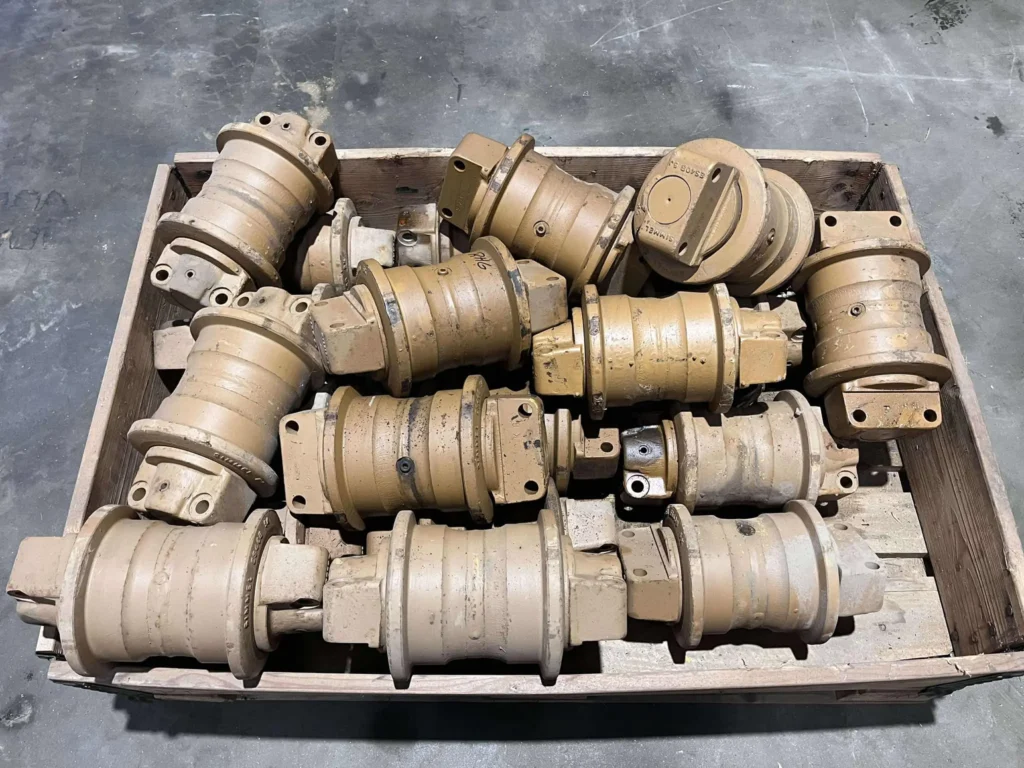
Track systems are critical for excavators and dozers. Many operators focus on performance but ignore maintenance differences between components. Two key parts often compared are the top roller and the bottom roller. Both support the track chain, but their working conditions are very different. This difference directly affects maintenance frequency, wear rate, and replacement cost.
The bottom roller carries the full weight of the machine. It works under constant pressure. Every movement transfers heavy load directly through it. It is always in contact with soil, rocks, mud, and water. This makes it more exposed to abrasion and impact damage. In real job sites such as mining, construction, or demolition, bottom rollers face continuous stress. Seals can fail due to contamination. Oil leakage is a common issue if maintenance is delayed. For most machines, bottom rollers require more frequent inspection and earlier replacement compared to other undercarriage parts.
The top roller has a different role. It supports the upper track chain and helps maintain track alignment. It does not carry the full machine weight. Its load is lighter and more stable. It is positioned higher, so it avoids direct ground contact. This reduces exposure to dirt and abrasive materials. As a result, wear speed is slower. Maintenance intervals are generally longer. However, poor lubrication or alignment issues can still cause failure over time.
From operator experience, bottom rollers usually demand more attention. They wear faster due to load intensity and harsh working environment. If the bottom roller fails, the entire track system can be affected. Machine stability decreases and fuel efficiency drops. In contrast, top roller issues often appear gradually and are easier to manage during routine checks.
High-quality manufacturing plays an important role in reducing maintenance needs. Precision machining, heat treatment, and strong sealing systems improve both roller types. Reliable undercarriage production ensures better durability and longer service life. A professional supplier with strict quality control can significantly reduce downtime and maintenance cost for end users.
In practical construction work, maintenance strategy matters as much as part quality. Regular inspection, proper lubrication, and timely replacement help extend the life of both top and bottom rollers. Many operators prefer sourcing from experienced manufacturers to ensure consistent performance across different working conditions and machine brands.
In conclusion, bottom rollers require more maintenance than top rollers due to higher load and direct ground exposure. Top rollers still need care, but their wear rate is slower. Understanding this difference helps operators plan maintenance schedules more effectively and reduce unexpected breakdowns.
If you are looking for durable track rollers with stable performance and long service life, professional manufacturing support and factory direct supply can help you reduce operating costs and improve machine efficiency. Send your inquiry for model compatibility and pricing support tailored to your equipment needs.
Dozerpart Operation Team
2026.4.12