
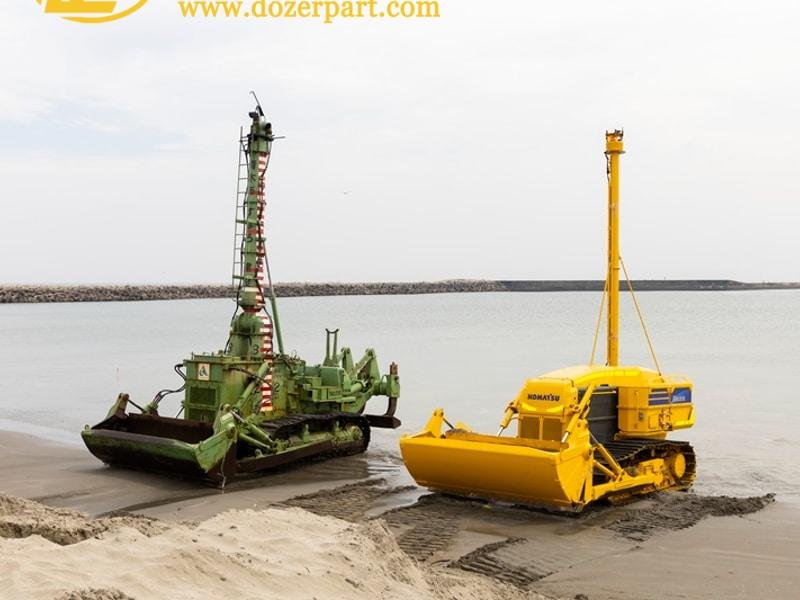
Extreme weather now defines modern construction planning. Floods, rising sea levels, unstable soil, coastal erosion. Project owners demand equipment that survives these conditions. Amphibious and hybrid dozers answer this demand. Their adoption accelerates across climate-resilience projects worldwide.
From the user view, the problem appears simple. Traditional dozers struggle in wetlands, soft ground, tidal zones, riverbanks, marsh restoration sites. Machines sink. Traction fails. Downtime grows. Repair cost increases. Amphibious designs change the equation. Wide pontoons distribute weight. Sealed undercarriage systems resist corrosion. Elevated drivetrains reduce water exposure. Operators move across waterlogged terrain with stability and control.
Hybrid systems push the advantage further. Fuel efficiency rises. Emissions drop. Noise levels fall. Torque response improves at low speed. Hybrid power management allows smoother blade control in sensitive environments. Flood mitigation projects value these benefits. Urban levee construction. Coastal defense reinforcement. Dam rehabilitation. Mangrove restoration. Canal dredging support. Every task benefits from machines built for wet conditions and continuous duty cycles.
Component reliability becomes the core decision factor. Amphibious dozers require sealed track rollers, reinforced idlers, corrosion-resistant sprockets, protected travel motors, heavy-duty final drives. Heat-treated steel. Multi-lip seals. High-capacity bearings. Precision machining. These features prevent premature failure when water, sand, salt, debris remain constant threats.
Fleet managers now evaluate machines by total lifecycle cost. Reduced fuel use. Lower maintenance intervals. Extended component lifespan. Hybrid systems reduce engine hours. Amphibious structures prevent undercarriage damage. Both factors protect long-term investment. Procurement teams prioritize suppliers with proven engineering, strict quality control, stable global supply, consistent testing procedures.
Global governments accelerate climate resilience spending. Asia river projects. European coastal barriers. North American floodplain reinforcement. Middle East desalination expansions. South American wetland restoration. Each region increases demand for amphibious and hybrid dozers. The equipment category evolves from niche to necessity.
For contractors, the message clear. Project bidding becomes more competitive. Owners require specialized capability. Contractors with amphibious and hybrid fleets win contracts faster. They finish work sooner. They reduce unexpected downtime. They improve safety. They build stronger reputations.
From the buyer perspective, choosing the right equipment partner determines success. Strong production capacity ensures delivery schedules. Advanced testing protects performance. Engineering support solves application challenges. Fast parts availability limits downtime. Technical documentation improves service planning.
Climate challenges will intensify. Infrastructure must adapt. Amphibious and hybrid dozers become frontline tools in global resilience efforts. Now the moment to evaluate solutions built for tomorrow’s terrain. Request technical data. Compare component designs. Review material standards. Discuss project requirements. Secure equipment that performs where others fail.
Dozerpart Operation Team
2025.12.28