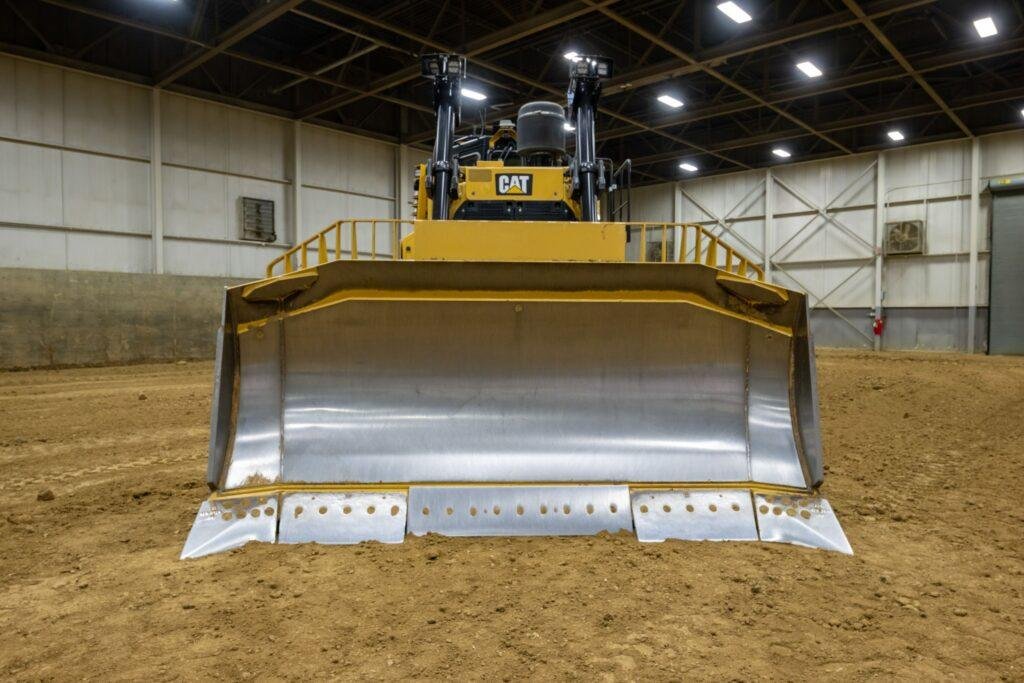
Blade setup affects more than surface finish. Every angle choice changes how power flows through a dozer. Many operators focus on engine output or track condition yet overlook blade position. Incorrect blade angle increases resistance. Higher resistance forces the engine to work harder. Fuel burns faster. Undercarriage parts wear sooner. Simple adjustments can reverse these problems and protect both machine and budget.
A neutral blade angle often delivers the best balance. When the blade sits too aggressive, soil piles too quickly. Tracks slip instead of pushing efficiently. Slip creates heat. Heat accelerates wear on sprockets and rollers. A slightly relaxed angle allows material to roll. Rolling reduces drag. Reduced drag lowers torque demand at the final drive. Operators feel smoother forward movement with less throttle input.
Side angle also matters. Excessive side tilt causes uneven load on one track. One side pushes harder. The opposite side drags. This imbalance increases bushing stress and chain stretch. Over time, uneven wear appears on rollers and idlers. Keeping the blade square to the direction of travel spreads force evenly across the undercarriage. Even force means longer service life for high-cost wear parts.
Cutting depth must match ground conditions. Deep cuts in compact soil overload the blade. The machine compensates by increasing power output. Fuel consumption rises immediately. Shallow passes reduce resistance. Multiple light passes often move the same volume of material with less stress. This approach protects track links and reduces vibration at the blade arms.
Blade pitch impacts fuel efficiency more than many expect. Forward pitch improves penetration in soft soil. Backward pitch suits grading and back-dragging. Using the wrong pitch wastes energy. Engines burn fuel to overcome unnecessary resistance. Correct pitch keeps the blade working with the ground instead of against it.
Jobsite terrain adds another factor. On slopes, adjusting blade angle helps maintain traction. Better traction reduces track spin. Reduced spin protects grousers and lowers wear on drive components. Controlled movement also improves safety and precision.
Maintenance teams see the long-term effect of blade setup. Machines with correct blade angles show slower wear on rollers, idlers, and track chains. Oil temperatures remain stable. Fuel records improve. These results come from simple habits, not complex upgrades.
In conclusion, blade angle setup plays a critical role in dozer efficiency. Correct angles reduce drag, balance load, and protect the undercarriage. Fuel savings follow naturally. Operators who fine-tune blade position extend machine life and control operating costs. For teams seeking durable undercarriage components and expert support tailored to real working conditions, reaching out for professional guidance and parts recommendations is a smart next step.
Dozerpart Operation Team
2025.12.14