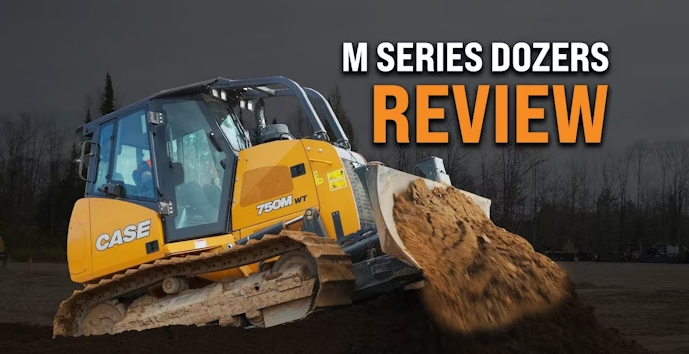
Case Construction Equipment continues to refine its lineup of dozers, and the latest updates to the 750M and 850M models have drawn positive attention from industry professionals. In a recent review on The Dirt, host and experienced operator Bryan Furnace took these machines for a test run, highlighting their strengths in grading, earthmoving, and machine control adaptability.
Built for Power and Precision
The Case 750M and 850M dozers stand out in the small dozer category, offering impressive performance for grading and aggressive dozing applications. Weighing in at 20,228 pounds, the 750M is powered by a 96-horsepower engine, while the 850M delivers 120 horsepower with an operating weight of 22,381 pounds. Despite being somewhat underrated in the market, Furnace describes Case’s dozers as excellent at both bulk earthmoving and fine grading.
“These machines really know how to push dirt,” says Furnace. “And they’re easy grading machines.”
Enhanced Controls for Smoother Operation
One of the biggest updates in these models is the transition from pilot controls to electro-hydraulic controls, aligning the 750M and 850M with the rest of Case’s dozer lineup. According to Furnace, this upgrade significantly improves operational ease and precision, making grading more effortless than ever.
A key feature that sets Case apart is the Fine Grade Mode, which allows operators to instantly adjust blade sensitivity with the push of a button. This eliminates the need to dive into menu settings, giving operators more control in real-time. “I can go from aggressive blade movement to fine grading instantly,” Furnace explains, praising the feature’s efficiency.
Additionally, Blade Shake—a function that helps remove sticky soil from the blade—adds to the machine’s convenience, making it easier to maintain optimal performance in varying conditions.
Aggressive Dozing with Load Management
While the 750M and 850M excel in precision work, they also hold their own in heavy-duty earthmoving. Case dozers are known for their ability to push significant amounts of dirt, and Furnace acknowledges their strength. However, he also notes a built-in Load Management System that prevents excessive track slippage by automatically adjusting power distribution. While some operators may initially feel that the machines lack the ability to spin their tracks aggressively, Furnace clarifies that the system is designed to preserve undercarriage longevity and maintain efficiency.
“One critique I have is that I’d like some adjustability from the operator’s standpoint,” he mentions, suggesting that giving users more control over load management settings could further enhance the dozer’s versatility.
Cab Comfort and Machine Control Readiness
While Furnace praises the dozers’ overall performance, he does note that cab noise is an area where Case could improve, calling for better soundproofing in future iterations. On the bright side, the latest updates make machine control integration seamless, eliminating the need for costly valve replacements to add GPS-assisted operation. This makes the 750M and 850M fully adaptable to modern job site demands.
A Worthy Contender in the Dozer Market
With their smooth operation, efficient grading capabilities, and machine control readiness, the Case 750M and 850M are strong competitors in the small dozer segment. Their combination of power and precision makes them ideal for contractors looking to optimize performance while maintaining ease of use.
“These dozers are pushing machines,” Furnace concludes. “They’re excellent for fine grading, and the transition to electro-hydraulic controls makes them more viable than ever.”
For contractors and operators looking for reliable and cost-effective dozing solutions, the 750M and 850M are certainly worth consideration.
Fulian Operation Team
2025.3.31